OMER

MALIK

Experimental Tech

Articles

Store

Flight Release Wizard

Saved the airline millions in regulatory fines by transforming its error-prone flight release process into a resilient, automated compliance workflow.

Timeframe

10 weeks

Focus

Workflow Optimization

Industry

Aviation

Type

Mission-Critical

Flight Release Wizard

Saved the airline millions in regulatory fines by transforming its error-prone flight release process into a resilient, automated compliance workflow.

Timeframe

10 weeks

Focus

Workflow Optimization

Industry

Aviation

Type

Mission-Critical

Flight Release Wizard

Saved the airline millions in regulatory fines by transforming its error-prone flight release process into a resilient, automated compliance workflow.

Timeframe

10 weeks

Focus

Workflow Optimization

Industry

Aviation

Type

Mission-Critical

Overview

A flight release is a mandatory authorization procedure that verifies all safety, weather, and operational criteria before departure.


However, the airline’s legacy process has struggled to keep pace with modern post-COVID operating conditions resulting in higher error rates, regulatory violations, and costly fines.

In our initial meeting, the United team made it clear that the reason behind the violations were from the data error entries made by the dispatcher’s flight release submissions. To ensure our solution would be anchored to measurable user and business outcomes, I used the HEART Framework and GSM (Goals, Signals, Metrics) method to align on the metrics and goals we were targeting (reduce Error Rate).

Research

Aviation safety standards demand near-perfection, so the airline’s 8% error rate in flight release submissions was classified as a systemic failure.


Contextual inquiries and dispatcher interviews revealed that flight releases were being completed under critical time constraints, forcing dispatchers to rely on fragmented legacy tools and manual data entry.

In our initial meeting, the United team made it clear that the reason behind the violations were from the data error entries made by the dispatcher’s flight release submissions. To ensure our solution would be anchored to measurable user and business outcomes, I used the HEART Framework and GSM (Goals, Signals, Metrics) method to align on the metrics and goals we were targeting (reduce Error Rate).

Solution

Transformed the airline’s flight release process from manual transcription to an integrated, compliance-automated wizard that prioritizes validation capabilities to meet aviation safety and regulatory requirements.

In our initial meeting, the United team made it clear that the reason behind the violations were from the data error entries made by the dispatcher’s flight release submissions. To ensure our solution would be anchored to measurable user and business outcomes, I used the HEART Framework and GSM (Goals, Signals, Metrics) method to align on the metrics and goals we were targeting (reduce Error Rate).

75%

fewer submission

errors

In our initial meeting, the United team made it clear that the reason behind the violations were from the data error entries made by the dispatcher’s flight release submissions. To ensure our solution would be anchored to measurable user and business outcomes, I used the HEART Framework and GSM (Goals, Signals, Metrics) method to align on the metrics and goals we were targeting (reduce Error Rate).

62%

faster release

cycles

120+

automated validation

checks

Methods

HEART Framework | GSM

Sketching | Userflow | Prototyping

Methods

Sketching | Userflow | Prototyping

Involved

Lead Dispatchers | Product Manager | Compliance Officer

I led the initial cross-functional kickoff using the HEART/GSM framework to align the team around goals, signals, and measurable metrics. During the session, stakeholders consistently pointed to regulatory violations and fines caused by errors and late submissions as their primary pain points.

In our initial meeting, the United team made it clear that the reason behind the violations were from the data error entries made by the dispatcher’s flight release submissions. To ensure our solution would be anchored to measurable user and business outcomes, I used the HEART Framework and GSM (Goals, Signals, Metrics) method to align on the metrics and goals we were targeting (reduce Error Rate).

I led the initial cross-functional kickoff using the HEART/GSM framework to align the team around goals, signals, and measurable metrics. During the session, stakeholders consistently pointed to regulatory violations and fines caused by errors and late submissions as their primary pain points.

By listening for patterns in their language and concerns, I translated these themes into a shared goal (reduce violations), signal (submission errors and timing issues), and metric (error rate and release cycle time).

In our initial meeting, the United team made it clear that the reason behind the violations were from the data error entries made by the dispatcher’s flight release submissions. To ensure our solution would be anchored to measurable user and business outcomes, I used the HEART Framework and GSM (Goals, Signals, Metrics) method to align on the metrics and goals we were targeting (reduce Error Rate).

I led the initial cross-functional kickoff using the HEART/GSM framework to align the team around goals, signals, and measurable metrics. During the session, stakeholders consistently pointed to regulatory violations and fines caused by errors and late submissions as their primary pain points.

Kick-off

Defining Success: Through the HEART & GSM Frameworks

Week 1

Research

Identifying the Issue in the Current Workflow

Week 2-3

Methods

Compliance Audit | Contextual Inquiry | Journey Map

Sketching | Userflow | Prototyping

Methods

Sketching | Userflow | Prototyping

My objective was to obtain the baseline error rate and the time-on-task. I used three specific methods to move from high-level assumptions to a clear, data-backed roadmap for the solution.

In our initial meeting, the United team made it clear that the reason behind the violations were from the data error entries made by the dispatcher’s flight release submissions. To ensure our solution would be anchored to measurable user and business outcomes, I used the HEART Framework and GSM (Goals, Signals, Metrics) method to align on the metrics and goals we were targeting (reduce Error Rate).

The Compliance Audit: Finding the Number

I ran a Compliance Audit on past flight releases to obtain a cold, hard number for the current error rate (the baseline). A baseline 8% error rate. This proved the current system

was a genuine liability. This gave us our "North Star" metric.

Contextual Inquiry: Watching the Struggle

To understand why 8% of releases had errors, I cleared 3 days for Contextual Inquiry, where I observed 5 dispatchers and watched them work in their actual environment - phones ringing, multiple monitors glowing, dozens of browser tabs open, manually copy-paste data between five different tools.

The Journey Map: Mapping the Stress

I synthesized everything I saw into a Journey Map to visualize the dispatchers' experience from start to finish. This did two things:

1. Tracked the Clock:

It confirmed exactly why it was taking an average time of 45 minutes to get a single flight cleared.

2. Measured the Mental Load:

I used this to track "Stress Points" and estimate a SUS (System Usability Scale) score. It mapped out the "manual loops" where dispatchers felt the most anxious about making a mistake.

What the Researched Revealed

The revealed that dispatchers were operating under extreme time pressure, they were manually cross-referencing data across five disconnected systems including weather, fuel plans, and NOTAMs. The fragmentation of tools and manual data transfers was a primary driver of critical errors and cognitive fatigue.

Error Rate

75%

Time on Task

45

SUS Score

35

5 disconnected systems

Dispatchers navigated multiple unlinked tools, increasing workload and fragmentation.

5 disconnected systems

Dispatchers navigated multiple unlinked tools, increasing workload and fragmentation.

5 disconnected systems

Dispatchers navigated multiple unlinked tools, increasing workload and fragmentation.

27+ Context Switches

Frequent tool switching disrupted focus and slowed critical operational decisions.

27+ Context Switches

Frequent tool switching disrupted focus and slowed critical operational decisions.

27+ Context Switches

Frequent tool switching disrupted focus and slowed critical operational decisions.

12 Manual Data Transfers

Manual data re-entry introduced error risk and consumed valuable time.

12 Manual Data Transfers

Manual data re-entry introduced error risk and consumed valuable time.

12 Manual Data Transfers

Manual data re-entry introduced error risk and consumed valuable time.

Tabs Open: ~18 on average

High tab counts scattered critical info and increased cognitive friction significantly.

Tabs Open: ~18 on average

High tab counts scattered critical info and increased cognitive friction significantly.

Tabs Open: ~18 on average

High tab counts scattered critical info and increased cognitive friction significantly.

Monitors: 3 per dispatcher

Multiple screens were required to track dispersed data across essential systems.

Monitors: 3 per dispatcher

Multiple screens were required to track dispersed data across essential systems.

Monitors: 3 per dispatcher

Multiple screens were required to track dispersed data across essential systems.

Pressure Window

Tight release deadlines forced fast decisions without adequate verification or checks.

Pressure Window

Tight release deadlines forced fast decisions without adequate verification or checks.

Pressure Window

Tight release deadlines forced fast decisions without adequate verification or checks.

Ideation

Engineering a New Workflow

Week 3-6

Methods

Sketching | Flow Diagram | Prototype

Sketching | Userflow | Prototyping

Methods

Sketching | Userflow | Prototyping

With a clear view of the problem, the next big question was how to actually fix it. We knew we had to fundamentally change how dispatchers worked to make compliance feel automatic rather than a chore.

In our initial meeting, the United team made it clear that the reason behind the violations were from the data error entries made by the dispatcher’s flight release submissions. To ensure our solution would be anchored to measurable user and business outcomes, I used the HEART Framework and GSM (Goals, Signals, Metrics) method to align on the metrics and goals we were targeting (reduce Error Rate).

01

Sketching

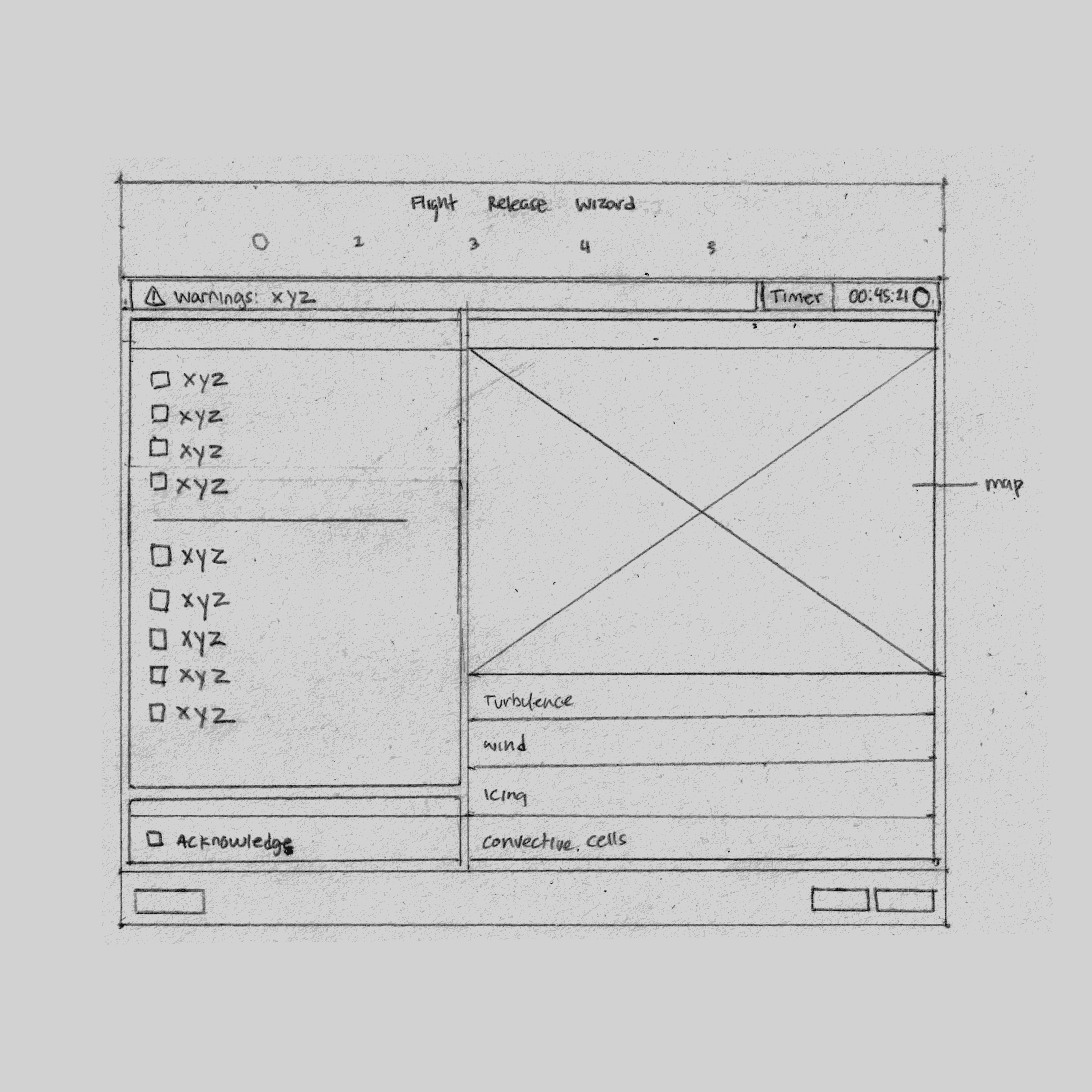
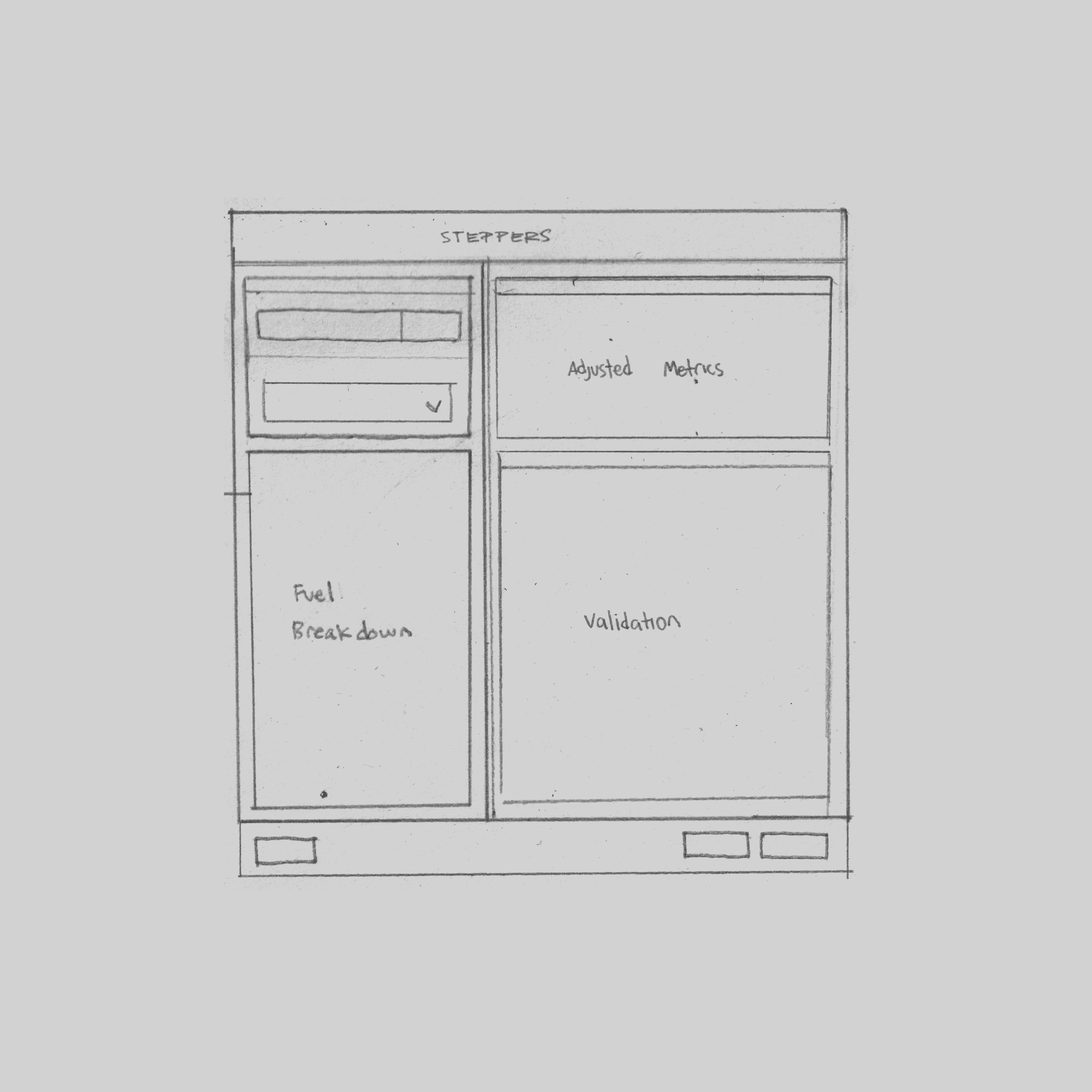
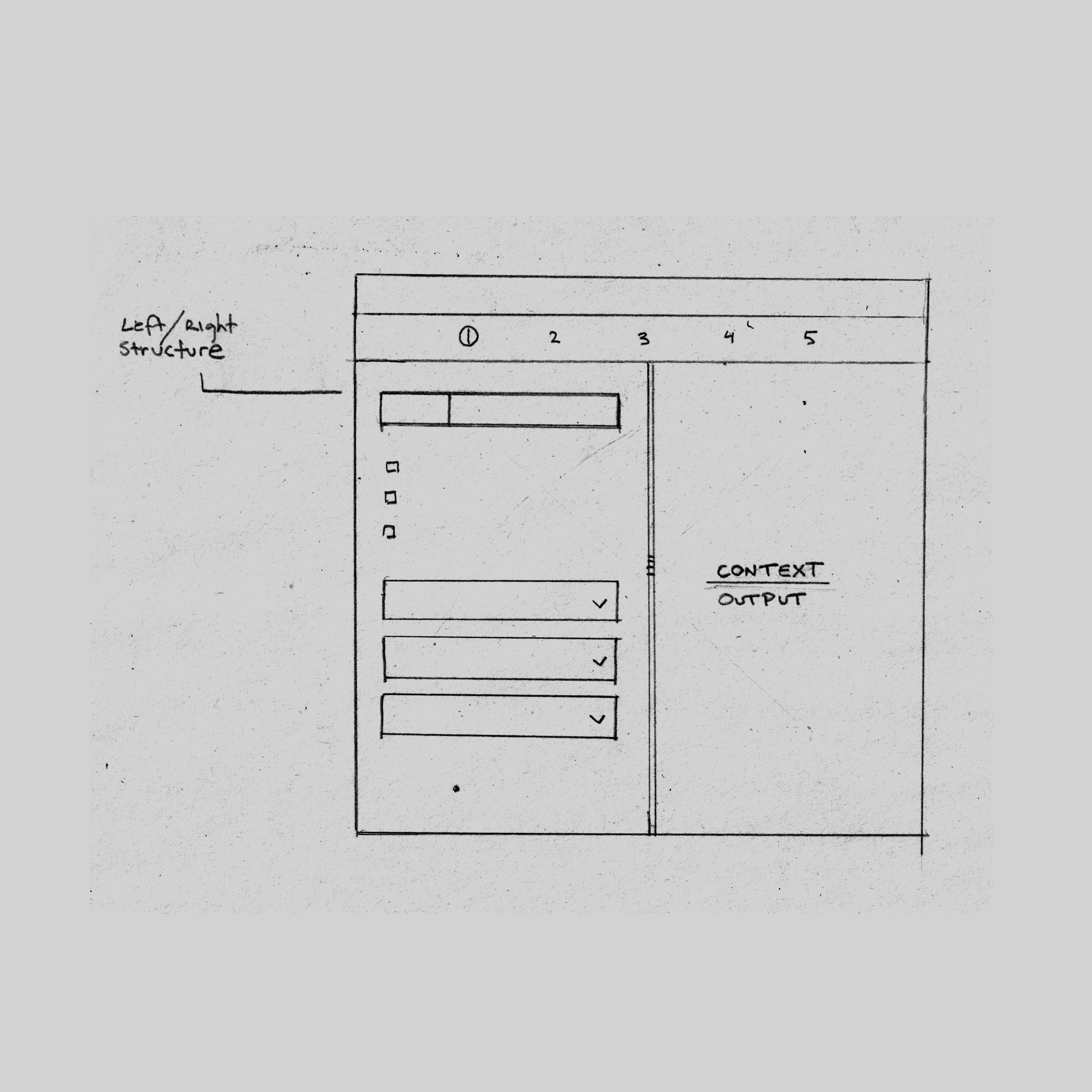
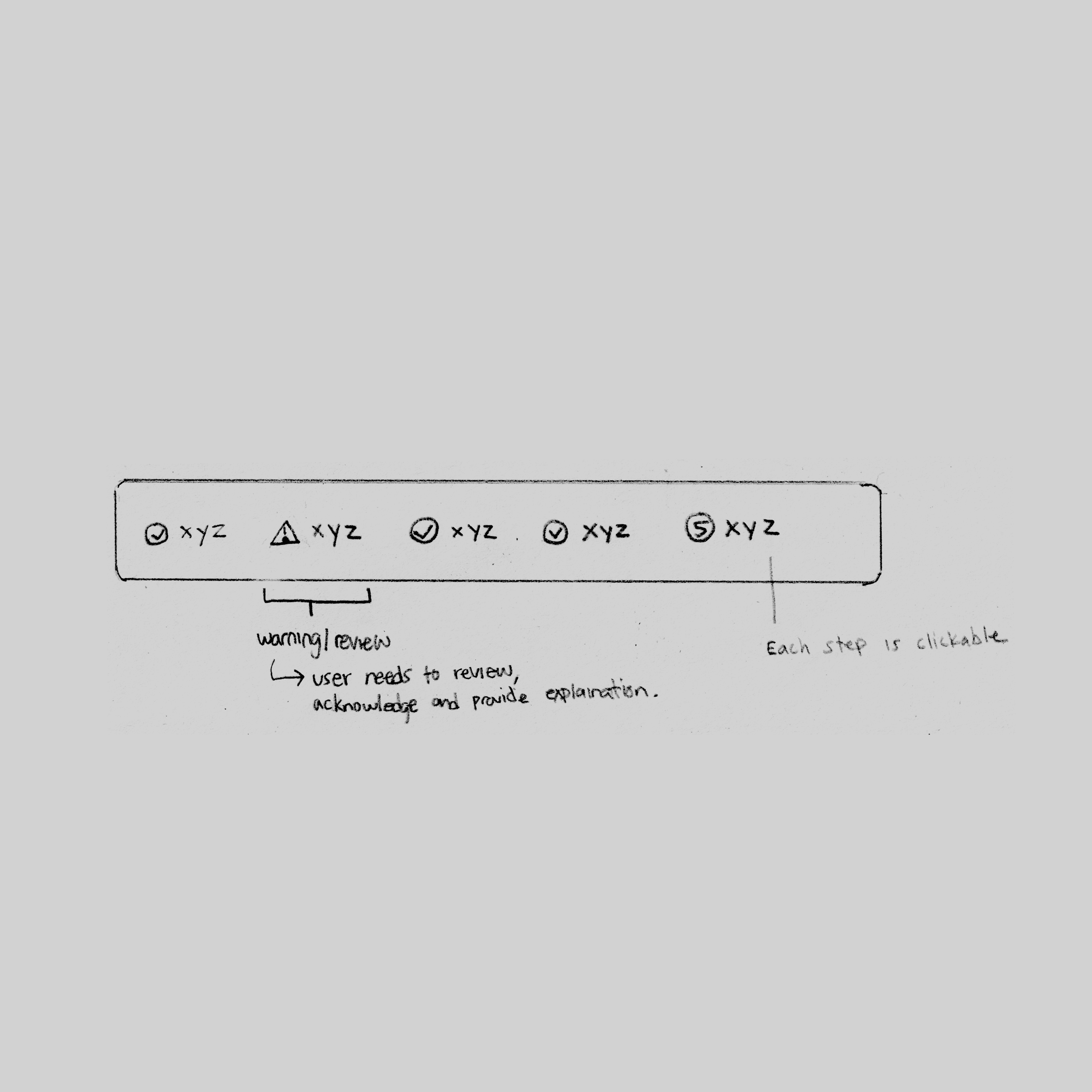
This challenge kicked off an intensive sketching phase. I filled pages with different interface patterns, trying to find the best way to organize the chaos. These early wireframes quickly pointed us toward the "Wizard Model." Instead of one overwhelming screen, we moved to a progressive, step-by-step framework. It was a strategic way to consolidate data and ensure no mandatory safety check was ever skipped.

02

User Flow

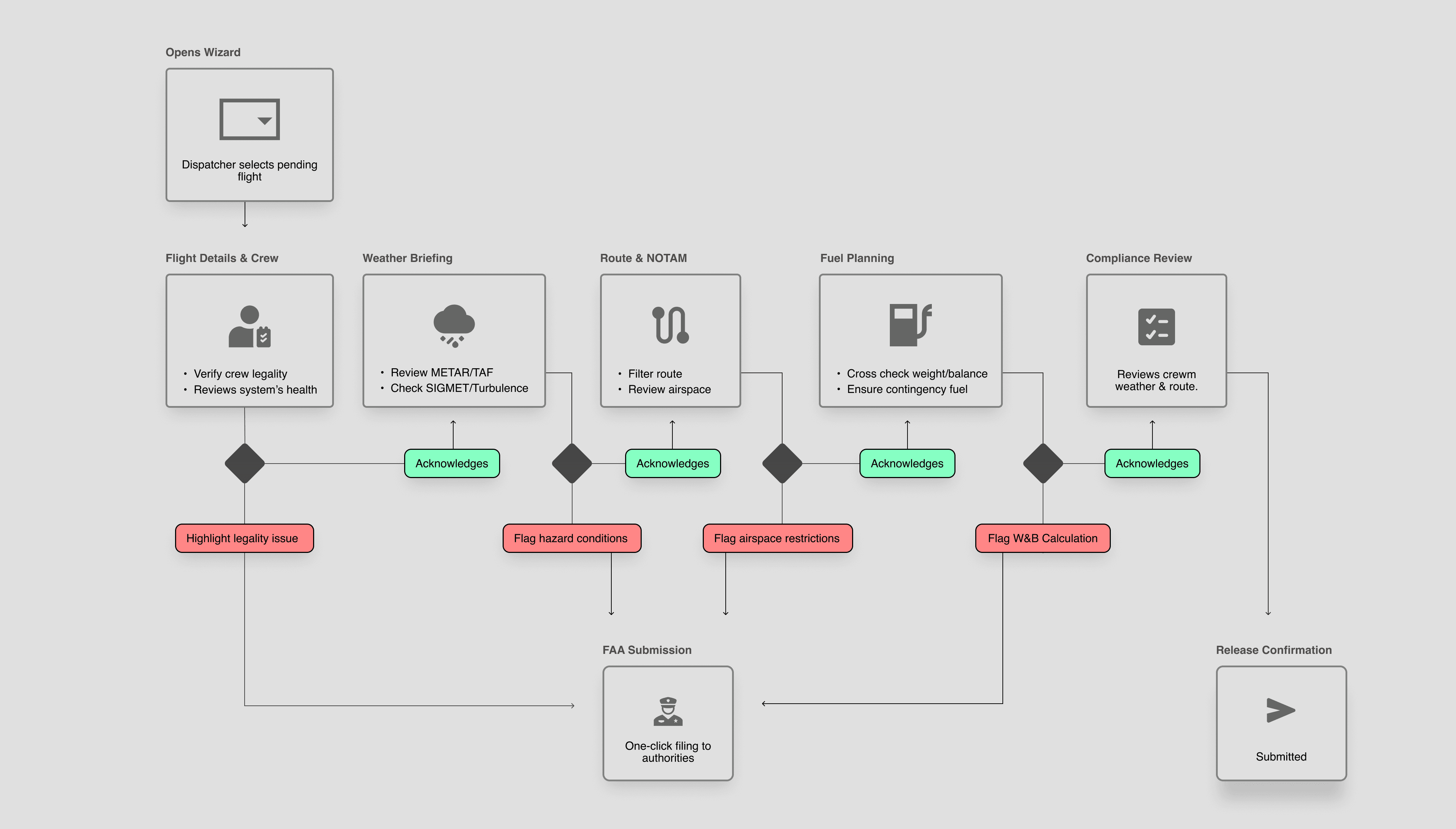
Our research had already exposed the "manual loops" that were killing efficiency. To kill that friction, I moved into flow diagramming. I mapped out every compliance rule and potential error state to see where the system could do the heavy lifting for the human. This deep dive led to the Real-Time Traffic Light Status Panel. By building this logic into the flow, we gave dispatchers immediate, fail-safe feedback, shifting their job from "hunting for errors" to "making confident decisions."

03

Prototyping for Proof

Once the logic was solid, we were ready to build. I gathered everything—the sketches, the flows, and the data rules—and packaged them into a low-fidelity, interactive prototype. We didn't need a finished product to start testing; we needed a tool that simulated the real-world experience.

Bringing this prototype to the Compliance Officers and Flight Leads allowed them to feel the new workflow for themselves. It made the safety and speed benefits obvious immediately. By validating our "Wizard" and "Traffic Light" concepts early, we fast-tracked the design process and saved a massive amount of development cost before a single line of code was ever written.

Auto-generated · Pending Dispatcher Review
Fuel & Performance
Fuel & Performance PlanSTEP 3 · FUEL & PERFORMANCE
Aircraft Type
B737-800
Tail
N905AA
Payload16,800 lbs
Zero Fuel Weight121,300 lbs
MEL
MEL 27-3 spoiler deferred · TO weight limited to 174.2K
Weather
TS along route · Arrival ceiling 800ft · 20kt crosswind at destination
Data auto-generated based on MEL + Weather + Route
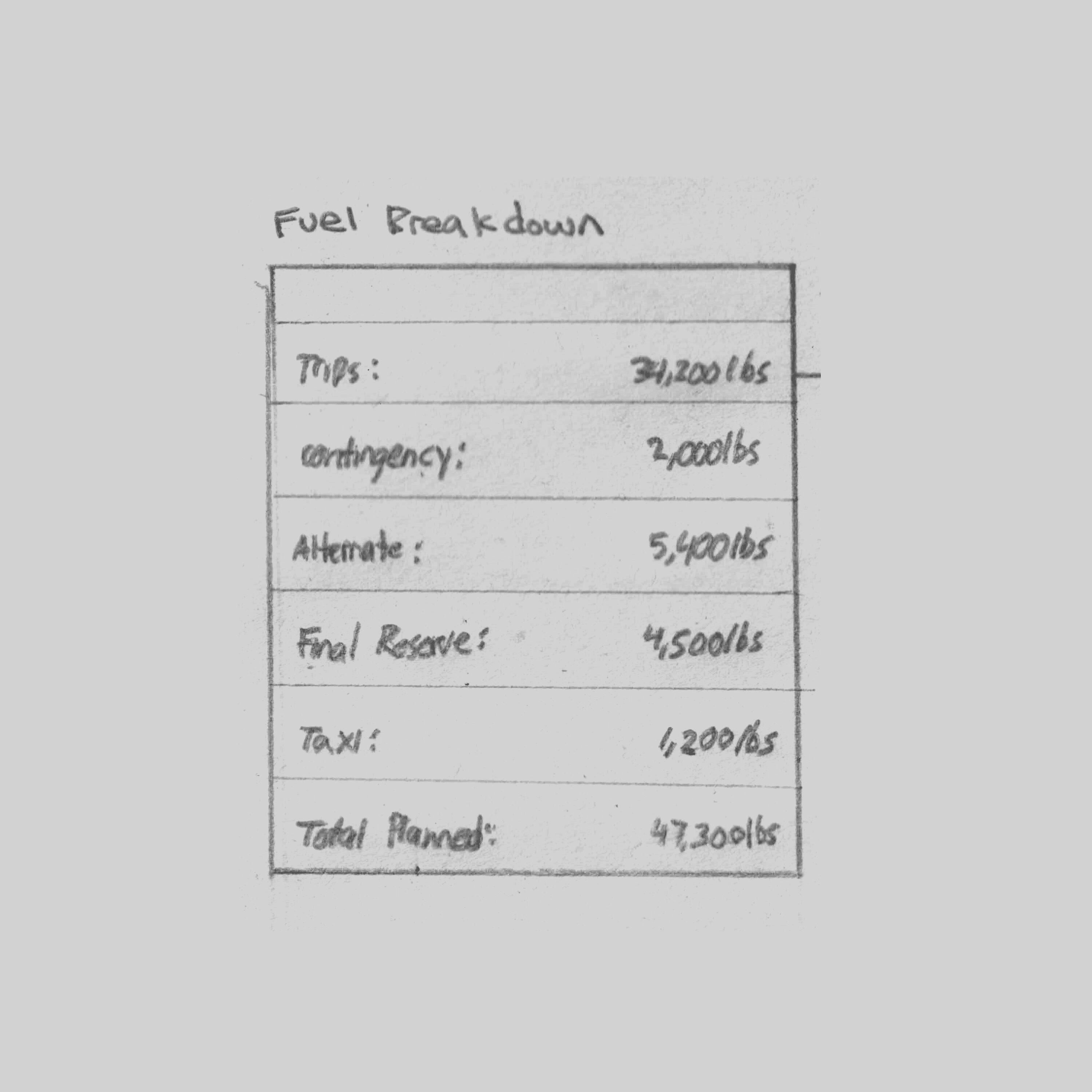
FUEL COMPONENTPLANNED
Trip34,200 lbs
Alternate5,400 lbs
Contingency2,000 lbs
Final Reserve4,500 lbs
Taxi1,200 lbs
Total Planned Fuel47,300 lbs
Dispatcher AdjustmentPredictive plan · Manual override
lbs
Applies captain-requested discretionary fuel on top of system plan.
PERFORMANCE METRICSADJUSTED
Planned Takeoff Weight171,900 lbs
Max Takeoff Weight174,200 lbs
Fuel Margin+2,300 lbs

Solution

The Flight Release Wizard

Week 6-8

Methods

Figma

Figma

Methods

Sketching | Userflow | Prototyping

From product definition through final release, we collaborated hand-in-hand with Flight Operations to build a unified Flight Release Wizard—a solution that is precise, compliant, and undeniably efficient. The final design is characterized by a linear, step-by-step progression that consolidates five fragmented data sources into a single source of truth. The interface is accented by clear, predictive visual cues that guide the dispatcher through a modern, error-resistant flow.


The design is rooted in three core principles: Consolidation, Automation, and Trust. Every interaction was carefully crafted to consider the high-stress environment of the operations floor, creating a definitive aesthetic of safety that sets this tool apart from legacy aviation systems.

In our initial meeting, the United team made it clear that the reason behind the violations were from the data error entries made by the dispatcher’s flight release submissions. To ensure our solution would be anchored to measurable user and business outcomes, I used the HEART Framework and GSM (Goals, Signals, Metrics) method to align on the metrics and goals we were targeting (reduce Error Rate).

01/10

Conscious of the systemic errors stemming from manual data aggregation, the biggest question for our team was how to fundamentally restructure the dispatcher's interaction to guarantee.

Feature

01/10

Conscious of the systemic errors stemming from manual data aggregation, the biggest question for our team was how to fundamentally restructure the dispatcher's interaction to guarantee.

Feature

01

Userflow

Conscious of the systemic errors stemming from manual data aggregation, the biggest question for our team was how to fundamentally restructure the dispatcher's interaction to guarantee compliance and reduce cognitive load.

01

Userflow

Conscious of the systemic errors stemming from manual data aggregation, the biggest question for our team was how to fundamentally restructure the dispatcher's interaction to guarantee compliance and reduce cognitive load.

Research findings

Setting a New Operational Standard

The partnership resulted in more than just a cleaner interface; it delivered a fundamental shift in operational safety and speed. By establishing a unified design language and automated validation logic, we transformed a fragmented workflow into a cohesive, high-trust experience. This new system not only mitigated regulatory risk but significantly boosted dispatcher confidence and loyalty across the division.

Error Rate

2%

Time on Task

17

SUS Score

87

Research findings

Setting a New Operational Standard

The partnership resulted in more than just a cleaner interface; it delivered a fundamental shift in operational safety and speed. By establishing a unified design language and automated validation logic, we transformed a fragmented workflow into a cohesive, high-trust experience. This new system not only mitigated regulatory risk but significantly boosted dispatcher confidence and loyalty across the division.

Error Rate

2%

Time on Task

17

SUS Score

87

Research findings

Setting a New Operational Standard

The partnership resulted in more than just a cleaner interface; it delivered a fundamental shift in operational safety and speed. By establishing a unified design language and automated validation logic, we transformed a fragmented workflow into a cohesive, high-trust experience. This new system not only mitigated regulatory risk but significantly boosted dispatcher confidence and loyalty across the division.

Error Rate

2%

Time on Task

17

SUS Score

87

Research findings

The Cost of Fragmentation

Our discovery phase confirmed that dispatchers were forced into a high-stakes balancing act. Operating under extreme time pressure, they were manually cross-referencing data across five disconnected systems—including Weather, Fuel Plans, and NOTAMs. This fragmentation wasn't just a usability hurdle; it was a primary driver of critical errors and cognitive fatigue.

Error Rate

8%

Time on Task

45

SUS Score

35

Research findings

The Cost of Fragmentation

Our discovery phase confirmed that dispatchers were forced into a high-stakes balancing act. Operating under extreme time pressure, they were manually cross-referencing data across five disconnected systems—including Weather, Fuel Plans, and NOTAMs. This fragmentation wasn't just a usability hurdle; it was a primary driver of critical errors and cognitive fatigue.

Error Rate

8%

Time on Task

45

SUS Score

35

Let’s Connect

I’m currently open to new opportunities and partnerships. If you’re interested in a deep dive into this case study or have a project in mind, schedule a quick call below.

I’m currently open to new opportunities and partnerships. If you’re interested in a deep dive into this case study or have a project in mind, schedule a quick call below.

United: Flight Release Wizard